Côn Đảo Airport could be upgraded from a domestic code 4C airfield to an international code 4E airport, but a short runway hemmed in by sea and hills, and the lack of night lighting, make the work difficult and costly, Tuổi Trẻ reported on 13 November.
Under the national aviation plan as adjusted in July 2026, the airport on Vietnam's southern island group would handle about 2 million passengers a year by 2030 and 5 million by 2050. The upgrade could allow wide-body jets such as the Boeing 787 and Airbus A350. The Civil Aviation Authority of Vietnam has sent the outline of the detailed master plan to the Ministry of Construction for appraisal.
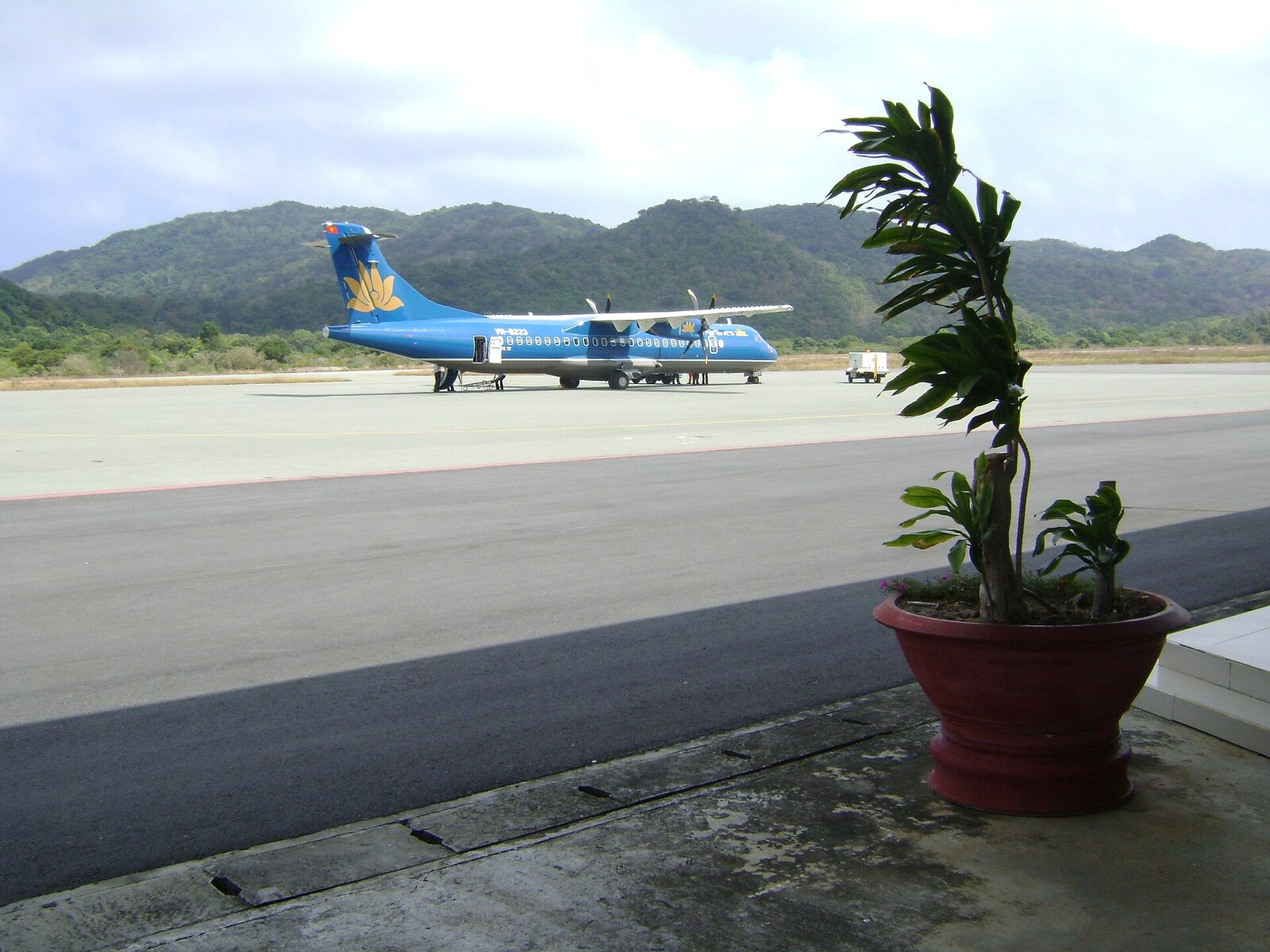
Today the runway is 1,830 metres long and 30 metres wide, and the main aircraft are ATR72 turboprops and COMAC C909 jets. Both ends sit close to the sea, one near Đầm Trầu beach and the other facing Bãi Vông, leaving little room to extend. Flights mostly run from about 6:00 to 18:00 because the airport lacks night lighting that meets normal operating standards, which limits extra flights in peak tourist season.
An airport operator ACV leader told Tuổi Trẻ that studying a longer runway has been a major headache, and that the bigger problem is the approach lighting system, part of which might have to be built offshore in strong currents and waves. A 2024 option to extend the runway seaward to 2,400 metres, so an Airbus A321 could fly with a full commercial load, was put at more than VND 10 trillion, with possible marine environmental impact. French consultant ADPi found the existing runway can serve most narrow-body jets such as the A320 and Boeing 737 if upgraded, though the A321 would face payload limits.
A cheaper alternative would keep the length but widen the runway from 30 to 45 metres and invest in taxiways, aprons and navigation systems. The newspaper also noted that reaching code 4E does not mean wide-body jets can operate at once, since runway strength, taxiways, aprons and safety systems must all qualify. An aviation expert questioned whether wide-bodies are needed at all, saying narrow-body jets could carry 5 million passengers a year with enough parking stands, terminal capacity and frequencies.
The aviation authority said Côn Đảo's new status as a special zone of Ho Chi Minh City opens opportunities for connectivity, tourism and investment, but expansion must weigh the island's character, economic efficiency, defence and security, and the environment. ACV is still calculating investment options, and the final plan depends on the master plan, demand forecasts and financial returns, according to Tuổi Trẻ's sources.
Sources
This story was compiled by the Da Nang Voice news desk from the published sources listed above. Facts, figures and quotes are attributed to those sources; Da Nang Voice did not conduct interviews for it unless the text says so. Corrections are dated and noted at the top of the story. Read our corrections policy. Spotted an error? Tell us.