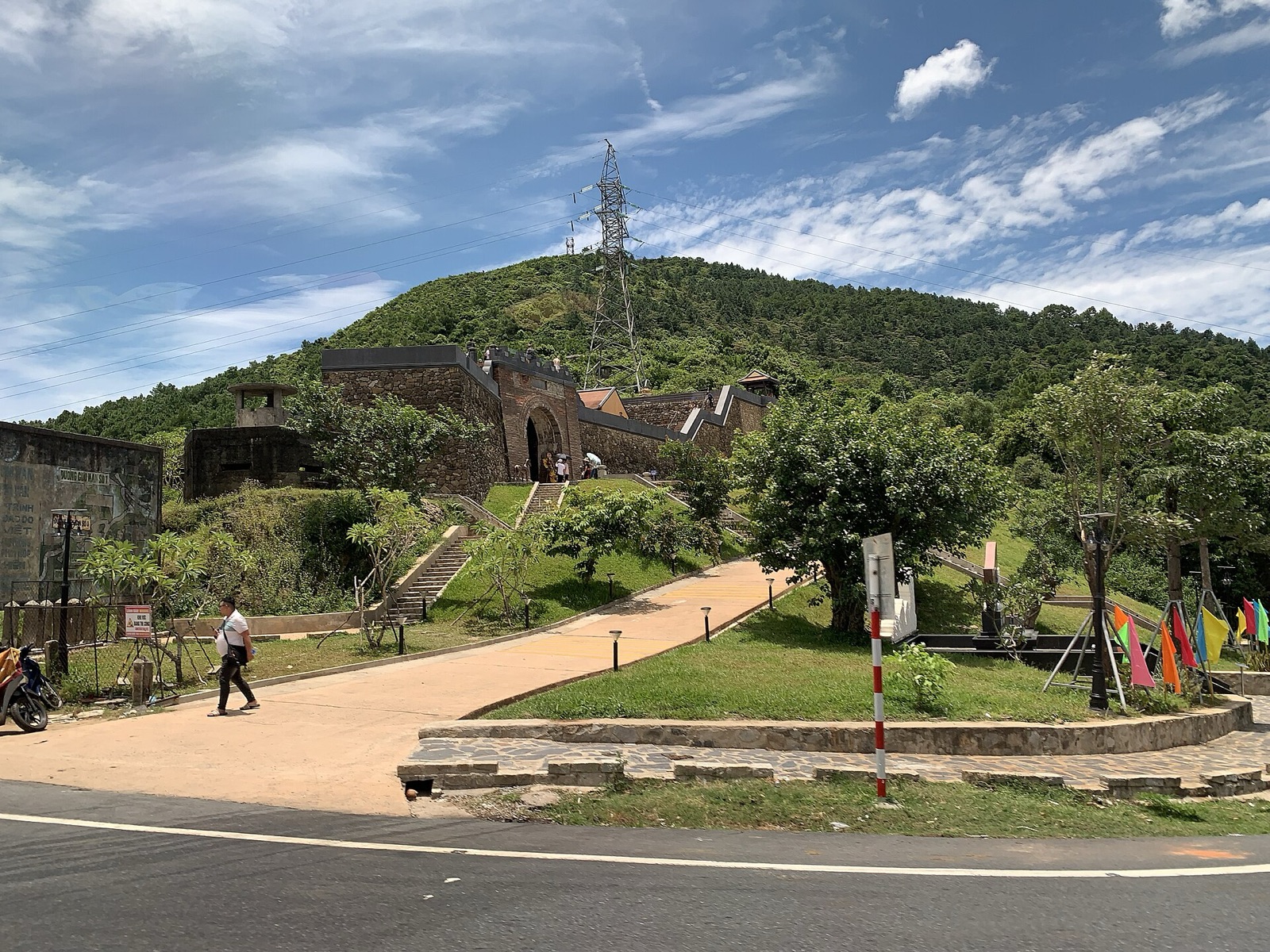
On a clear day, the drive over Hai Van Pass is about 21 kilometers of switchbacks between Da Nang and Lang Co, climbing to roughly 500 meters, with the sea on one side and forest on the other. On a bad day, the mountain lives up to its name: Hải Vân means "sea cloud." For most of Vietnam's history, the pass wasn't scenery. It was a border.
The frontier
The Truong Son range reaches all the way to the sea here, which made Hai Van the natural dividing line of central Vietnam. According to Wikipedia's history of the pass, drawing on a Lonely Planet guide, it was the physical boundary between the Vietnamese kingdom of Đại Việt and the kingdom of Champa from 1306 until a Vietnamese invasion in 1471. Older accounts suggest that in the first century, the Chinese general Ma Yuan may have set bronze columns at Hai Van to mark the southern edge of the Han empire. The word "possibly" in that source is doing heavy lifting, so treat it as tradition, not record.
Popular histories usually tie the 1306 date to one of the period's best-known stories, the marriage of the Vietnamese princess Huyền Trân to a Cham king. It's told in many versions, so read it as history shaded by legend.
The gate
The fortress at the summit is younger than the legends. In 1826, Emperor Minh Mạng of the Nguyen dynasty ordered a defensive gate built at the top of the pass, finished within months by laborers from Thua Thien and Quang Nam, according to the Vietnamese Wikipedia entry on Hải Vân Quan. The gate facing Da Nang is inscribed "Hải Vân Quan." The gate facing Hue reads "Thiên hạ đệ nhất hùng quan," roughly "the most formidable pass under heaven." A tradition credits that title to Emperor Lê Thánh Tông, who is said to have passed through in 1470. Again, it's a tradition, not a documented fact.
The fortress declined under French rule. By the early 20th century, visitors described it as abandoned. In 1926, French forces built bunkers at the summit that later passed to the U.S. military, and the remains are still visible. The pass was the scene of heavy fighting in both the war against France and the American war.
The tunnel and the TV show
The modern turning point came underground. The Hai Van Tunnel, 6,280 meters long and Vietnam's longest road tunnel, opened on June 5, 2005, after five years of construction, according to Wikipedia. A second tube followed in 2021. Trucks and buses abandoned the switchbacks, and the old road became a motorbike pilgrimage, helped along by a 2008 Top Gear special in which Jeremy Clarkson called it "a deserted ribbon of perfection."
The restoration
In 2017, Vietnam's culture ministry designated Hai Van Quan a national historical and architectural-artistic monument. Because the gate straddles the border between Da Nang and Hue, the two governments split a restoration project 50-50. The project cost more than 42 billion dong, began in 2021 and was declared complete at a joint ceremony on December 21, 2024, Saigon Giai Phong reported. A Hue official called the site a potential "gold mine" if it's managed well, and called the joint effort a "historic handshake" between the two localities (both translated from Vietnamese).
Why it still matters
Hai Van is still the climatic and cultural divide of central Vietnam, and it's still a frontier of a kind. Earlier this month, artifacts from Nguyen-era defense posts at its foot went to the Da Nang Museum, part of the evidence that this mountain spent centuries as a wall before it was a view. Ride it slowly, stop at the gate, and read the inscription facing Hue. It was written for travelers who had a lot more to worry about than the weather.
Sources
- Hải Vân Pass
- Hải Vân quan
- Công bố hoàn thành Dự án bảo tồn, tu bổ, phục hồi và phát huy giá trị di tích quốc gia Hải Vân Quan
- Hải Vân Tunnel
This story was compiled by the Da Nang Voice news desk from the published sources listed above. Facts, figures and quotes are attributed to those sources; Da Nang Voice did not conduct interviews for it unless the text says so. Corrections are dated and noted at the top of the story. Read our corrections policy. Spotted an error? Tell us.