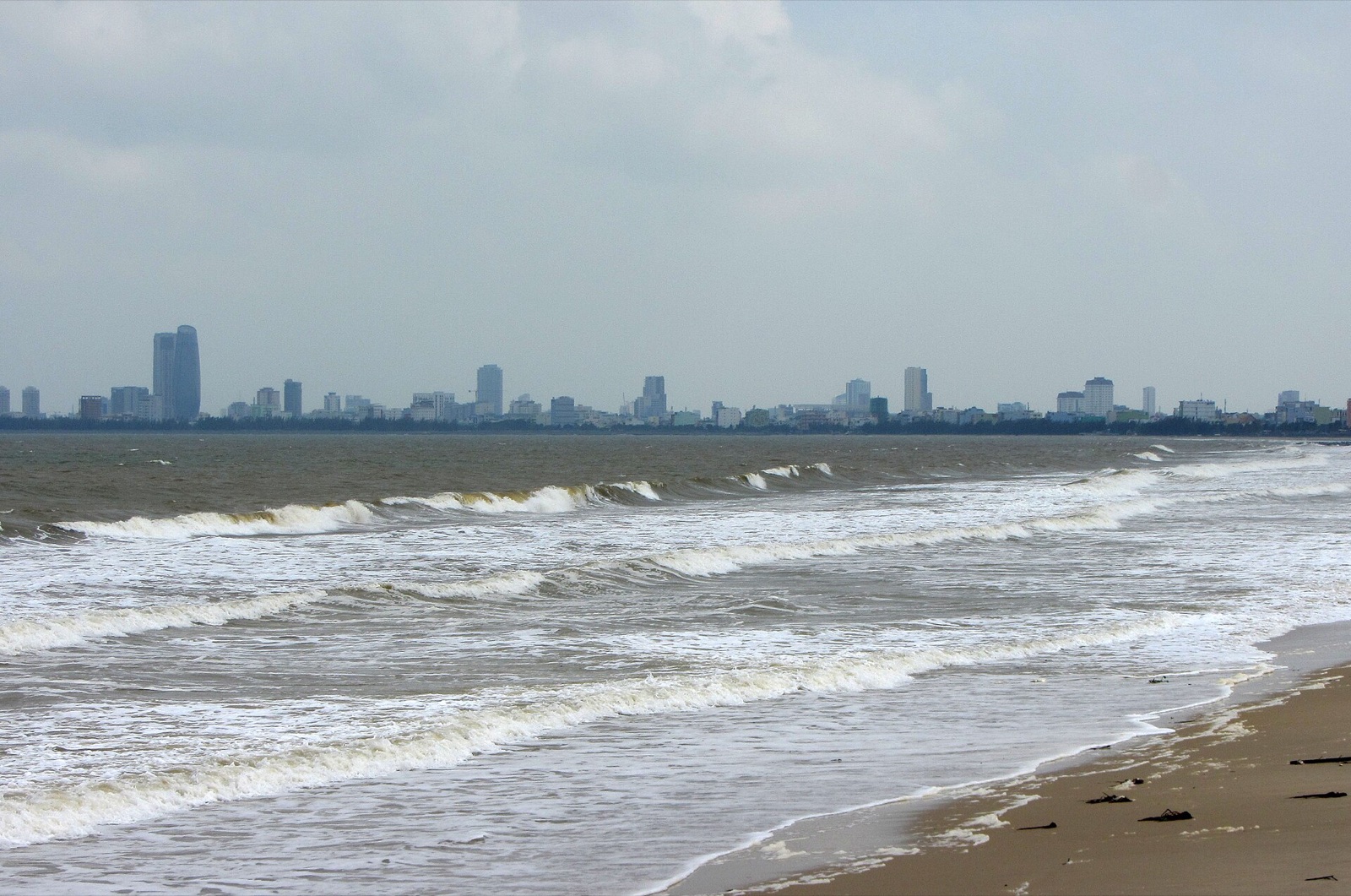
Every autumn, the same question shows up in travel forums: is it a mistake to visit Da Nang between September and December? The honest answer is that it depends on how flexible you are. The rainy season is real, and in a bad year it is dangerous. It's also not a four-month monsoon wall, and plenty of people live and travel through it every year.
Here's what the averages say, what a bad year looks like, and how to plan around both.
Last verified: October 11, 2026. For current warnings, follow Vietnam's national weather service and local authorities, not this article.
The numbers
Da Nang has a typhoon and wet season from September to December and a dry season from January to August, according to the climate section of Wikipedia's Da Nang entry. The city averages about 2,205 millimeters of rain a year, and most of it falls in a few months. The climate table there gives these monthly averages:
- September: about 351 mm
- October: about 628 mm
- November: about 448 mm
- December: about 218 mm
- March and April, for comparison: about 25 mm and 35 mm
In other words, an average October brings roughly 25 times the rain of an average March. The heat runs the other way: the average daily high is about 25°C in January and 34.5°C in June.
Averages hide the shape of the season. A monthly total says nothing about whether the rain fell steadily or in a few violent days, and in a bad year a single storm system can do most of the damage.
What a bad year looks like
Late October 2025 is the recent example. Floodwater on the Thu Bồn River put many areas of Hoi An ward under two to three meters of water, and some reached 3.4 meters, Tuoi Tre News reported. Locals compared it to the historic 1964 flood. Boats became the main way to move people and supplies.
The coast suffers too. Weeks of rain and high waves in late 2024 tore away about 100 meters of sand and dike at My Khe Beach, Viet Nam News reported.
Within the city, low-lying streets flood in heavy downpours. In the mountains, landslides cut roads and crack hillsides. This season, the city has already put armored vehicles and rescue boats on standby.
What closes
The weather affects more than the beach:
- Son Tra peninsula: sightseeing routes are suspended when a severe weather warning is issued, under the rules in force since September 2025, Báo Văn Hóa reported. Before that, the routes had been shut since landslides in October 2022.
- The railway over Hai Van Pass: in March 2026, rain-loosened rocks broke the track and derailed a freight train, and passengers were bused between Da Nang and Lang Co, Tuoi Tre News reported.
- Boats to the islands: trips to Cu Lao Cham depend on the sea. See our day trips guide.
- Swimming: stick to lifeguard zones year-round, and take red flags seriously. Our beach guide explains the rules.
How to plan a rainy-season trip
- Build in slack. Don't put a flight, a train and a boat trip back to back on the same day in October or November.
- Book flexibly. Refundable rooms and changeable tickets cost more and are worth it.
- Stay somewhere that doesn't flood. If you're renting, ask the landlord and the neighbors. Our renting guide explains how.
- Watch the official forecasts and local news in the days before you travel. When authorities tell people to stay home or move, they mean it.
- Use the dry days. When the sun comes out, go to the mountain or the beach that day. Don't save it for later.
Is it worth it?
The late rainy season is noticeably cooler than summer, and it's the low season for visitors. But a rainy-season trip only works if you can absorb a lost day or two without disaster. If your dates are fixed and your plans depend on boats and mountain roads, aim for the dry months instead.
Sources
- Da Nang (climate section)
- Foreign visitors deeply moved by historic flooding in Hoi An Ancient Town
- Đà Nẵng mở lại tuyến tham quan, dã ngoại tại bán đảo Sơn Trà
- Freight train derails on Hai Van Pass as rockslide damages track, disrupting North-South railway
- Erosion damages beaches in Đà Nẵng and Hội An
This story was compiled by the Da Nang Voice news desk from the published sources listed above. Facts, figures and quotes are attributed to those sources; Da Nang Voice did not conduct interviews for it unless the text says so. Corrections are dated and noted at the top of the story. Read our corrections policy. Spotted an error? Tell us.