Ask someone in Da Nang which beach they go to and the answer tells you where they live, when they get up and how they feel about crowds. Since the July 2025 merger with Quang Nam, the city's coastline runs from the foot of Hai Van Pass to Tam Ky, so the list is longer than ever. Rankings are a matter of taste. Here's what makes each stretch different, and what doesn't change from one to the next.
Last verified: October 11, 2026. Beach conditions change with the season and the weather. Swim only where lifeguards and buoys mark a safe zone.
The city beach: My Khe and its neighbors
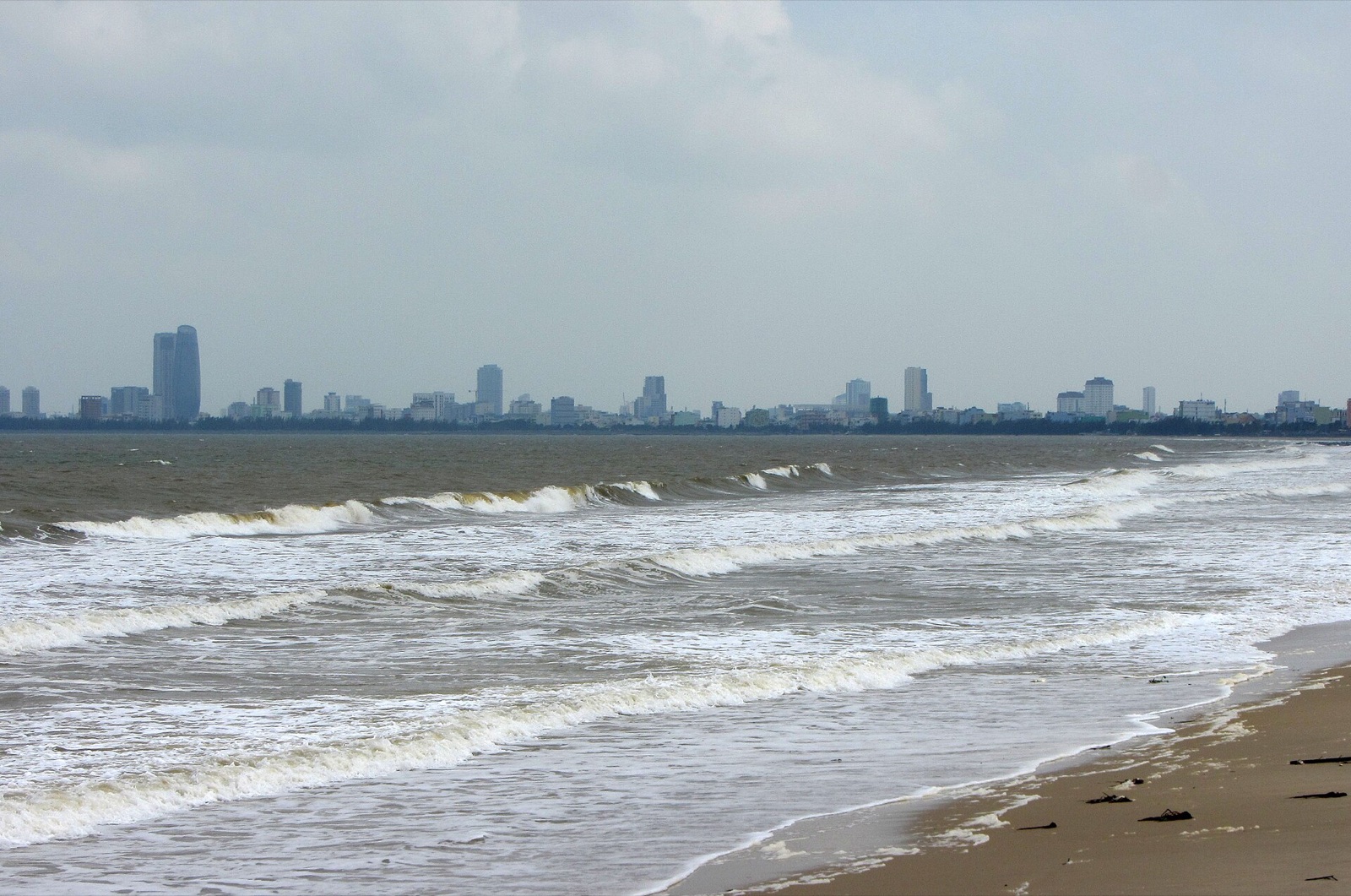
The long sweep east of the Han River, running from the Son Tra side toward Non Nuoc, is what most people mean by "Da Nang beach." Various sections carry local names, including My Khe, Phạm Văn Đồng, Mân Thái and Tân Trà. It's the beach of early-morning swimmers, evening football, apartment towers and seafood restaurants.
It's also a beach under pressure. In the winter of 2024, waves and weeks of rain stripped away about 100 meters of sand and dike at My Khe and damaged up to 20 meters of dike and walkways, Viet Nam News reported on January 1, 2025. Erosion was also found at Mân Thái, about 3 kilometers away. Crews used sandbags and bamboo piles to shore up the dike.
The rules that apply everywhere
The single most useful thing to know about Da Nang's city beaches is that swimming outside the marked zone is how people get into trouble. In April 2026, two tourists were swept out by strong waves after swimming outside a designated safe zone at Tân Trà Beach. A lifeguard swam out with a lifebuoy and brought both back, Tuoi Tre News reported. The beach management board's advice was simple: follow lifeguard instructions, pay attention to flags and whistles, and swim only inside the safety buoys.
The sea changes character in the autumn rainy season, when big waves and storms are more likely. A calm-looking morning in October is not the same as one in May.
Son Tra: coves instead of a strip
North of the city beach, the Son Tra peninsula has smaller beaches in coves, with forest behind them. Bãi Bắc is reached by a one-way road from the Bàn Cờ summit, and access rules, opening hours and closures in bad weather are set by the peninsula's management board. Some rocky spots are off-limits altogether. Read our Son Tra guide before you go, because "I saw it on a map" is not the same as "it's open."
Nam O: a reef, not a resort
At the northern end of the bay, in Liên Chiểu, Nam O is the coast as working village. Nam O Reef is a band of rock about 500 meters long running out into the sea, about 17 kilometers from central Da Nang, according to VietNamNet. In spring, at low tide around dawn, moss turns the exposed rocks green.
It's also next door to the Nam O fish sauce village, which has been making fish sauce for more than 400 years and was designated national intangible cultural heritage in late 2019, VTV reported. Come for the rocks, stay for the smell, and buy a bottle.
Cua Dai and An Bang: the Hoi An coast
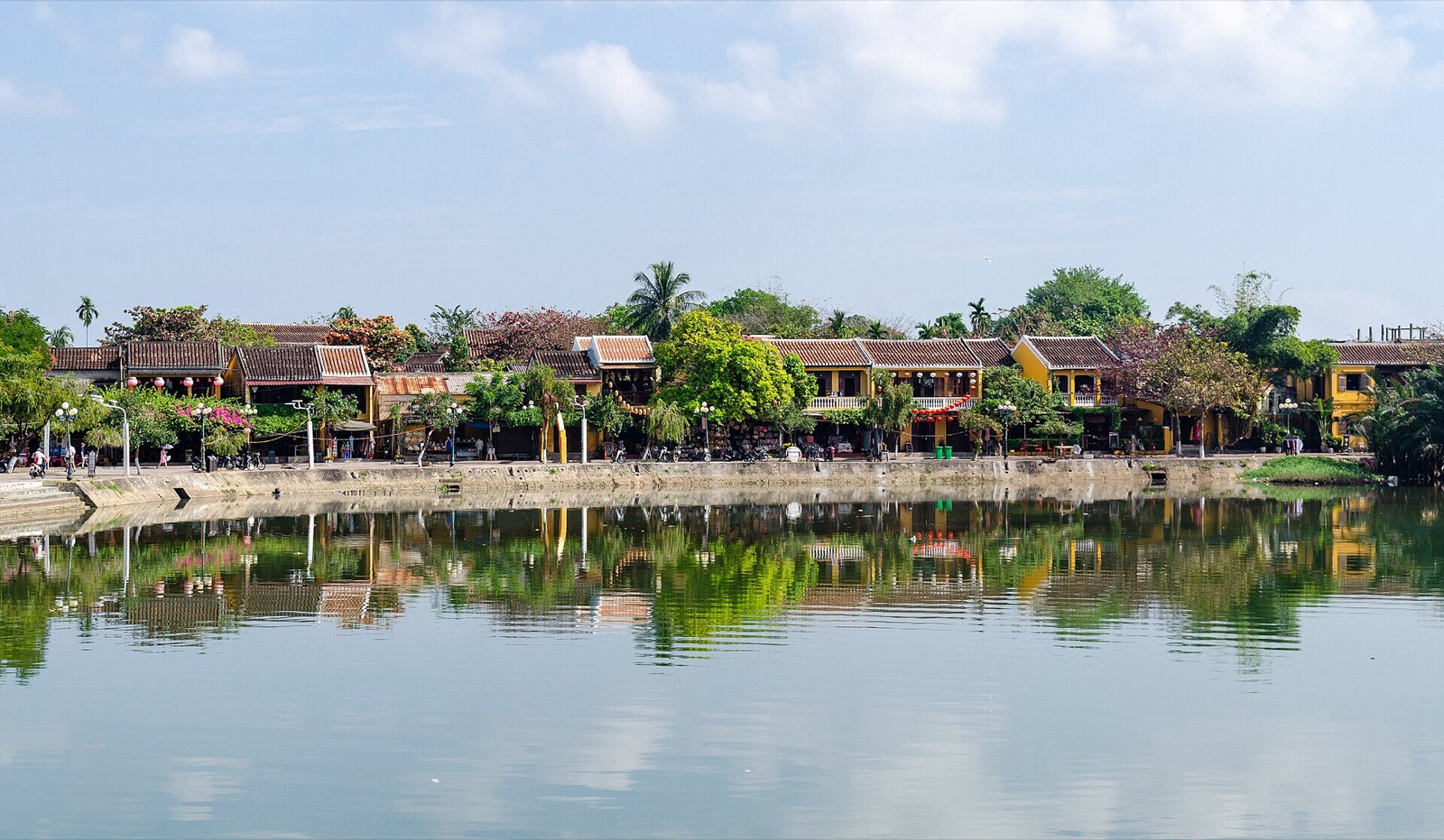
The beaches nearest Hoi An's old town are part of Da Nang now, and they come with a warning. Since 2000, the shoreline at Cửa Đại has retreated roughly 100 meters inland, according to Viet Nam News, which reported on a 42-million-euro restoration project scheduled to run until the end of 2026. In the same storms that hit My Khe in late 2024, about 200 meters of Cửa Đại beach was damaged. Bamboo walls were put up to protect it. Check the current state of the sand before booking anything sold as beachfront. If you're weighing a long stay down there, see our Da Nang vs. Hoi An comparison.
Tam Thanh: the beach with murals
At the southern end of the merged city, near Tam Ky, the fishing village in Tam Thanh became a mural village in 2016. Five South Korean artists and 12 Vietnamese and Korean volunteers turned the walls of 100 houses into murals under a Korea Foundation community art program, Viet Nam News reported at the time. The city tourism portal lists Tam Thanh Art Village among its free sites. It's a long drive from central Da Nang, so pair it with a day trip south.
How to pick
- Want lifeguards, showers and food? Stick to the patrolled sections of the city beach.
- Want quiet? Go early. Every beach is quieter at 6 a.m.
- Want something other than sand? Nam O's reef and Son Tra's coves are the alternatives.
- Traveling with children? Our family guide has more on beaches and parks.
Sources
- Erosion damages beaches in Đà Nẵng and Hội An
- 2 Indian tourists rescued from near drowning off Da Nang beach
- Nam O Reef, the green pearl of Da Nang
- 400-year-old fish sauce craft village in Da Nang
- Art project makes a splash in fishing village
- Solutions for restoring and protecting Cửa Đại Beach, Hội An coastline
This story was compiled by the Da Nang Voice news desk from the published sources listed above. Facts, figures and quotes are attributed to those sources; Da Nang Voice did not conduct interviews for it unless the text says so. Corrections are dated and noted at the top of the story. Read our corrections policy. Spotted an error? Tell us.