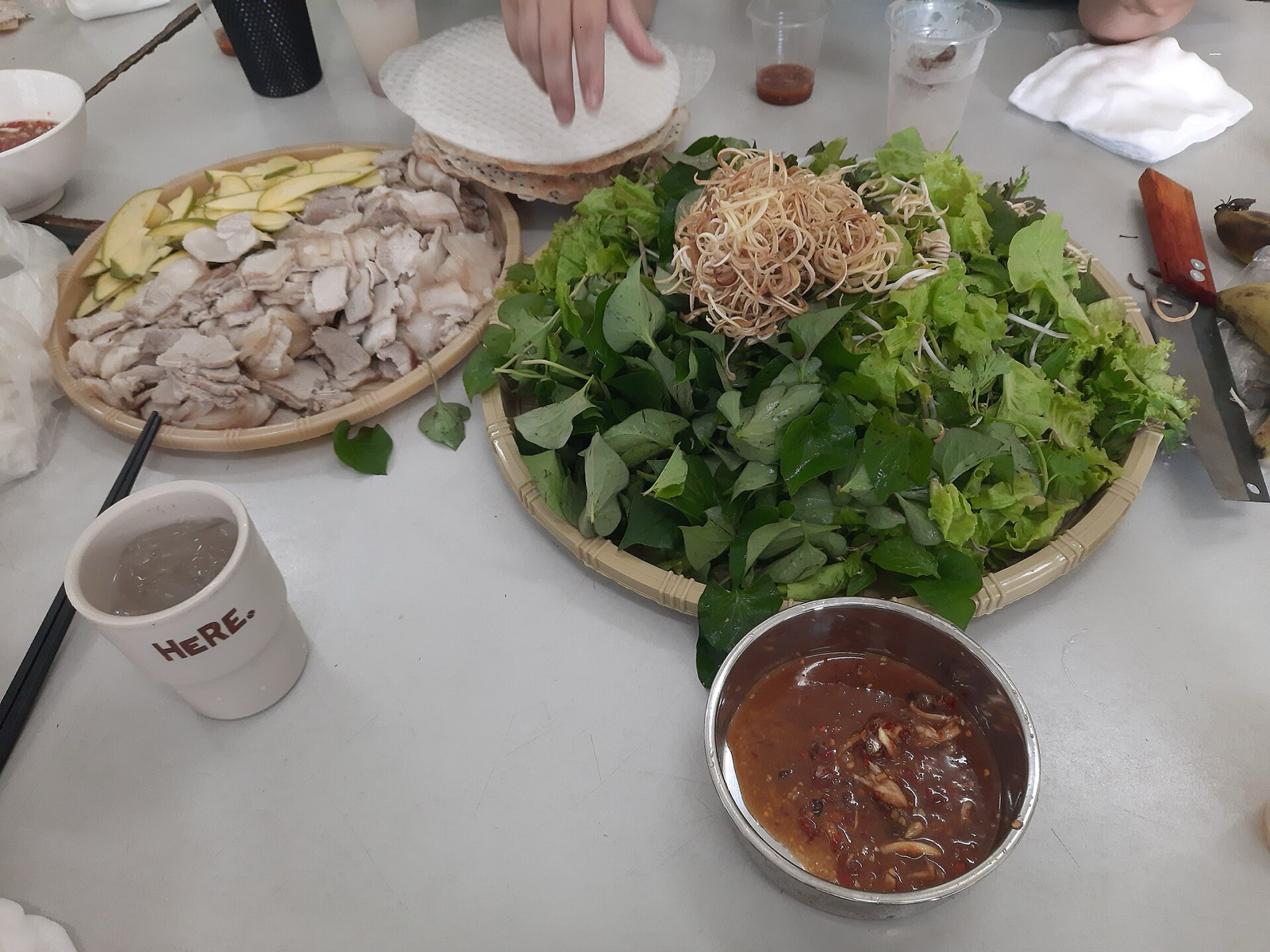
Some dishes win you over with technique. Bánh tráng cuốn thịt heo wins with restraint. It's boiled pork, rice paper, a mountain of herbs and one aggressively fermented sauce, and in Da Nang it's dinner, a snack and a reason to argue about whose aunt does it best.
Vietnam's national tourism authority calls it a Da Nang refinement of the country's long tradition of rolled rice-paper dishes, once known mainly to people from Quang Nam and Da Nang and now famous nationwide, according to its guide to the dish. The name tells you most of it: bánh tráng (rice paper), thịt heo (pork), cuốn (roll).
The pork
Everything rides on the pork, and the pork rides on the cut. A VnExpress recipe feature on Da Nang's famous "thịt heo hai đầu da," pork with skin at both ends, lays out the logic. Choose a cut with a balance of lean and fat, such as shoulder, leg or belly, sometimes rolled around a strip of rind whose collagen holds the slices together once cooled. Simmer it briefly with ginger and shallots, let it finish gently off the heat, then plunge it into ice water so it stays pale and fragrant. Slice it thin with a very sharp knife. Overcook it and it goes dry and crumbly. Get it right and it's just cooked, naturally sweet and faintly pink.
The paper and the plants
The rice paper matters too. A 2020 piece in Phap Luat TP.HCM by a writer from the region singles out rice paper from Dai Loc, a rural area west of the city now inside Da Nang, as famously soft and chewy after a quick dip in water. The same piece describes the dish in the countryside as "rustic but honest and full of feeling" (translated from Vietnamese), served with fermented fish sauce, fresh herbs and slices of astringent green banana.
The herb plate is not decoration. The tourism authority's guide lists lettuce, cucumber, perilla, Thai basil, banana blossom, mint and coriander, plus a side of thin rice noodles that go into the roll.
The sauce
Then there's mắm nêm, the part that sends some visitors running and keeps locals coming back. Unlike the clear, salty fish sauce most people know, mắm nêm is a thick paste of whole fermented anchovies. The tourism authority describes it as a Quang Nam specialty mixed with sugar, chili, garlic, lemongrass and crushed pineapple. It's pungent, funky and loud, and it's the reason the plain pork tastes like anything at all.
How to build one
According to the tourism authority's guide:
- Lay a sheet of rice paper flat, or cup it in your palm.
- Add a few rice noodles, which help everything stick.
- Layer pork and a generous fistful of herbs.
- Roll it up and dip one end in mắm nêm.
Nobody will grade your roll, but everyone will notice if you skip the sauce.
Why it suits Da Nang
The dish says something about the city's food in general. It isn't built on secret broths or hours at the stove. It's built on good pork, fresh herbs from the countryside, rice paper from the villages west of town, and a sauce that's proudly regional. It's a whole province on one plate, no technique required, but no shortcuts either.
The tourism authority's guide names a few long-running specialists. We haven't verified that they're still trading, so we're not listing them here. Ask around, and ask whether the mắm nêm is made in-house.
Sources
- Da Nang rice paper rolls with pork (bánh tráng cuốn thịt heo)
- Bí quyết luộc thịt heo 2 đầu da nổi tiếng ở Đà Nẵng
- Về Đại Lộc ăn thịt heo bánh tráng
This story was compiled by the Da Nang Voice news desk from the published sources listed above. Facts, figures and quotes are attributed to those sources; Da Nang Voice did not conduct interviews for it unless the text says so. Corrections are dated and noted at the top of the story. Read our corrections policy. Spotted an error? Tell us.