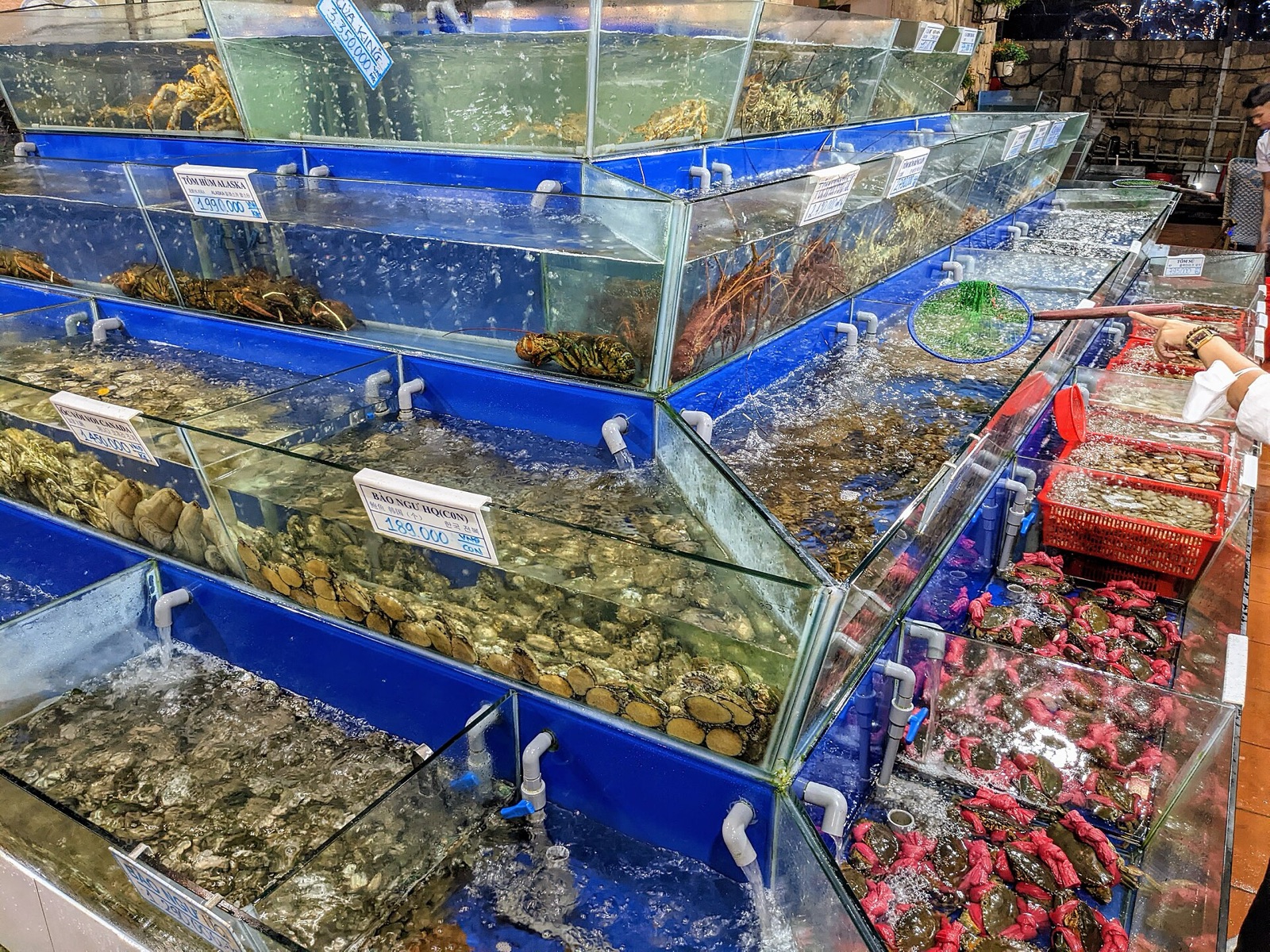
Da Nang is a fishing city that happens to have a skyline. The boats still come in before dawn, the catch still lands on the sand, and by evening a good share of it is sitting in a glass tank on a sidewalk, waiting for someone to point at it.
That last step is where visitors, and sometimes locals, get nervous. So here's how it works.
Where the fish comes from
Before it reaches a restaurant tank, the catch moves through beach markets like the one at Tam Tien on the city's far southern coast, where boats return around 4 a.m. and the catch is ferried ashore in round basket boats, Viet Nam News reported. What's on offer changes daily: tuna, scad, anchovies, squid and blue swimming crab, depending on the night at sea. (We wrote about how Tam Tien turned its market into a food stop.) The market season there runs roughly April to September and winds down when October seas turn rough. That's a useful reminder that "fresh seafood" in Da Nang is seasonal, even when tanks are full year-round.
How ordering works
At most seafood restaurants, the routine is the same:
- Pick from the tank. Crabs, prawns, clams, snails and fish are kept live and are typically priced by weight.
- Weigh it in front of you. Ask to see the scale. It's normal, not rude.
- Choose a preparation. Grilled, steamed, stir-fried with tamarind or garlic, or in a hotpot. Confirm whether cooking is included before you order.
- Check the posted price before anything goes in the pot. Posted price lists are the city's main tool against overcharging, and authorities say they check that vendors follow price-listing rules.
About those overcharging stories
Claims of padded seafood bills surface regularly on social media, and Da Nang authorities respond to them. In July 2026, after posts accused vendors at the Son Tra night market of overcharging, selling stale seafood and diluting juice, the An Hai ward government sent inspectors. Their preliminary check found that seafood, food and drink stalls generally displayed price lists or menus, that nobody was charging more than the listed prices, and that there was no evidence of spoiled food, Tuoi Tre News reported. The ward cautioned that the findings were preliminary and ordered a fuller inter-agency review, including food-safety sampling.
The practical lesson: the system works best when customers use it. Read the price list, confirm the weight, and keep the receipt. If something goes wrong, the ward that runs the market is the place to complain.
The Michelin shortcut
If you'd rather start somewhere independently vetted, the city tourism portal's list of 2026 Michelin selections includes several seafood names. Bé Ni 2 in Son Tra holds a Bib Gourmand, the guide's good-value category. Năm Đảnh in Son Tra and Mỹ Hạnh Seafood and Bé Mặn in Ngu Hanh Son are in the Selected category. We haven't eaten at them for this guide. They're here because the 2026 list, published in June, includes them.
What locals know
Eat where the tanks are busy, because turnover means freshness. Go early in the evening, before the good stuff sells out. Order by the kilo for the table, not by the plate per person. And don't skip the simple dishes: steamed clams with lemongrass, grilled squid, a crab with salt and pepper. In a city this close to the boats, the less done to it, the better.
Sources
- Da Nang dismisses overcharging claims at Son Tra night market after preliminary inspection
- Complete guide to MICHELIN-recognized restaurants in Da Nang 2026
- Dawn breaks over Tam Tien fish market
This story was compiled by the Da Nang Voice news desk from the published sources listed above. Facts, figures and quotes are attributed to those sources; Da Nang Voice did not conduct interviews for it unless the text says so. Corrections are dated and noted at the top of the story. Read our corrections policy. Spotted an error? Tell us.