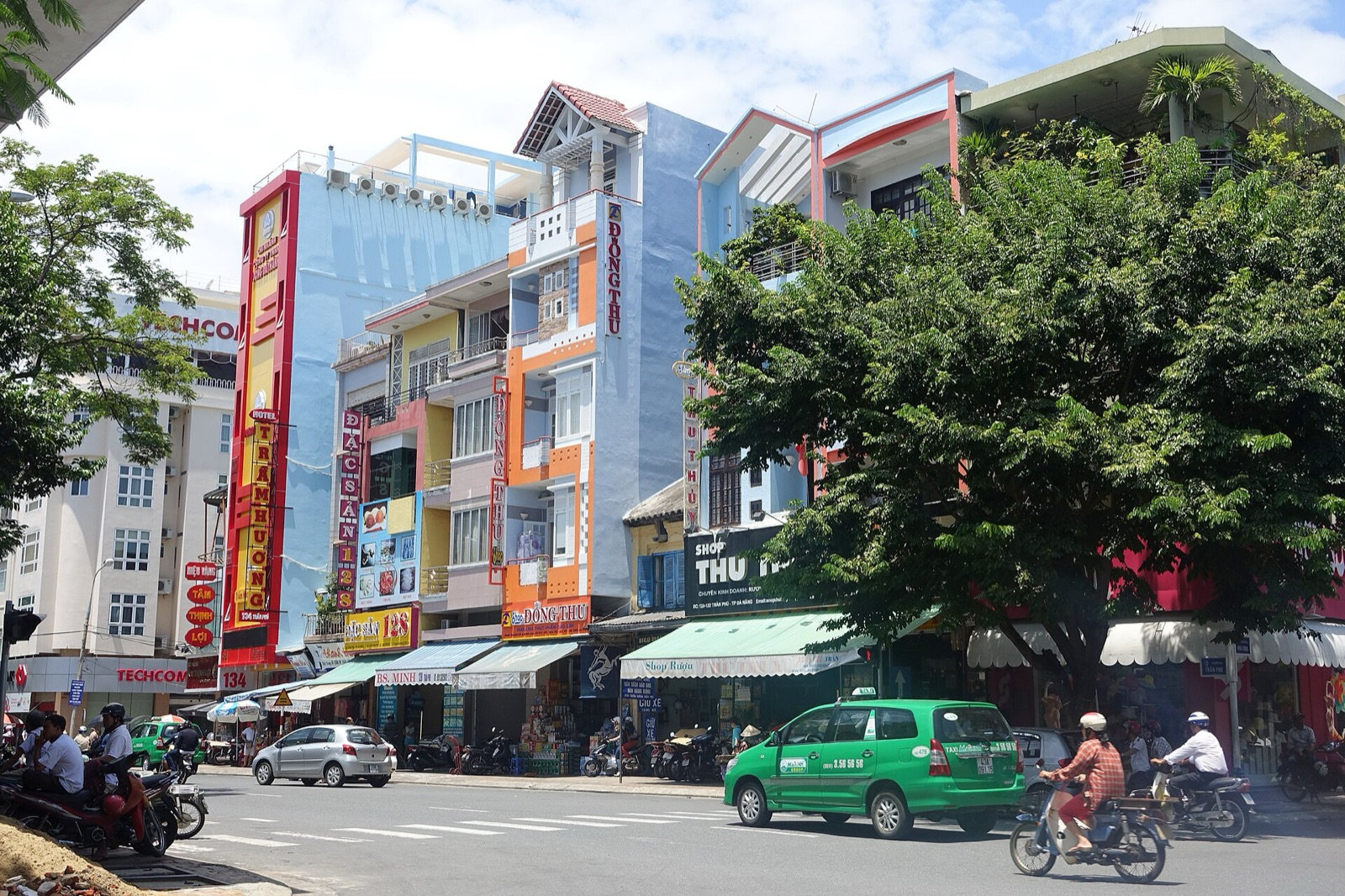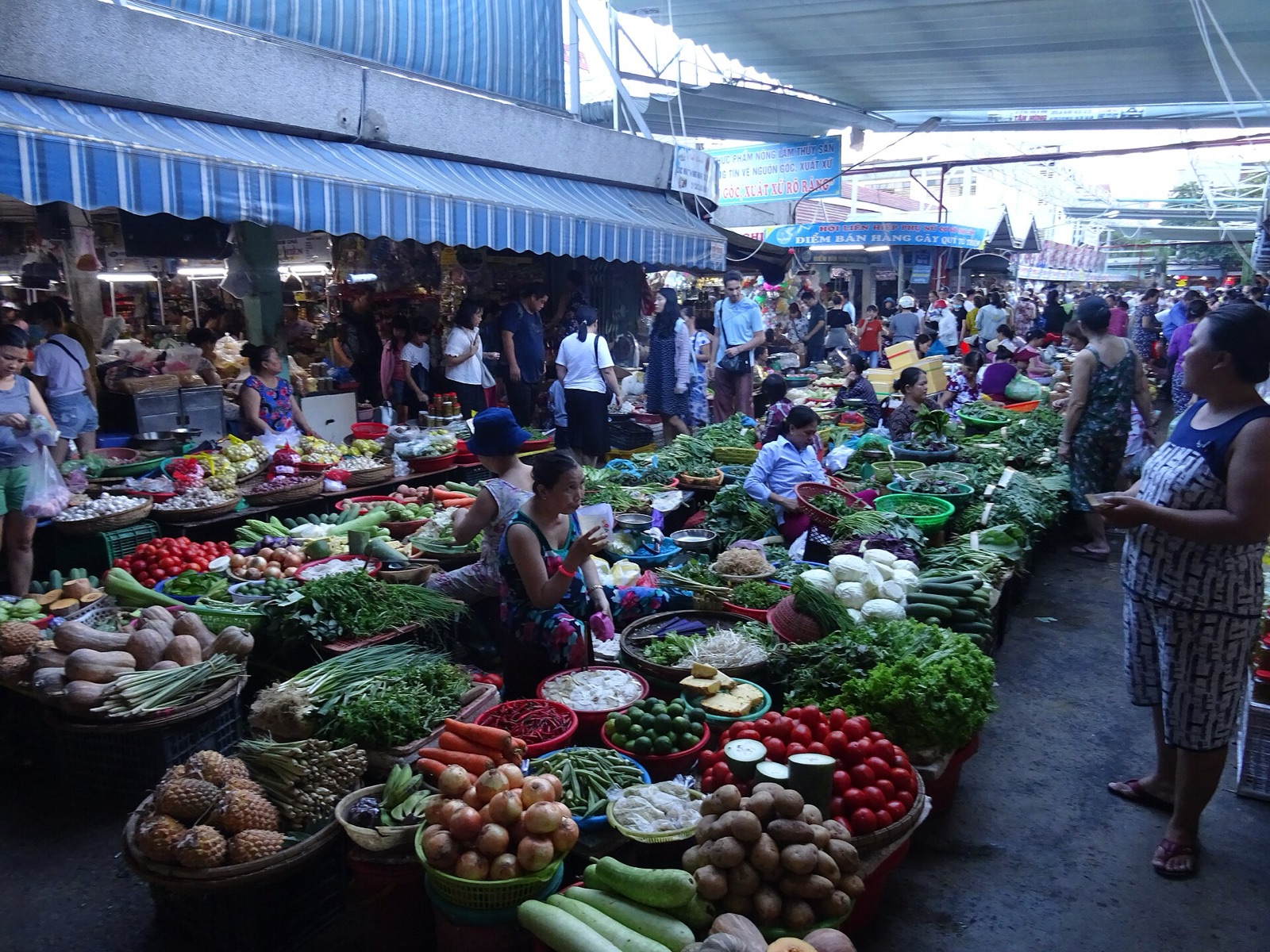
You can learn a lot about a city from where it buys its greens. In Da Nang, the answer isn't one place. There's a famous market on the river that sells to visitors and residents alike, an older neighborhood institution a short ride inland, a night market built for strolling, and neighborhood stalls that open before most tourists wake up.
Last verified: October 11, 2026. Opening hours and vendors change. Prices at markets are usually negotiated or posted by individual stalls, not set centrally.
Han Market: the one on the river
Chợ Hàn sits in Hải Châu, on the block between Trần Phú, Bạch Đằng, Hùng Vương and Nguyễn Thái Học streets, a short walk from the Han River Bridge. It dates back to 1940, according to Vietnamese Wikipedia, and work on the current building began in 1989. It's a two-story market on a site of about 28,000 square meters.
Because it's so central and so close to the riverfront hotels, Han Market serves visitors as well as residents. Shop with your eyes open. Compare a few stalls before you buy, and know roughly what something should cost.
Con Market: the one locals mean
A short ride inland, Chợ Cồn is more of a neighborhood institution. It got its name in the 1940s because it stood on a raised mound, a cồn, in the middle of the city, according to Vietnamese Wikipedia. In December 1984, the provincial government rebuilt it as a three-story building with 14,000 square meters of floor space and officially named it the Đà Nẵng Trade Center. Locals kept calling it Chợ Cồn anyway, and in 2012, at residents' request, the city gave it its old name back.
It sits between Hùng Vương and Ông Ích Khiêm streets. Come for the produce, the dry goods and the food stalls. If you want to understand the dishes before you order, read our guide to Da Nang dishes beyond mì Quảng.
The night market
Son Tra Night Market, on the east bank near the Dragon Bridge in An Hải ward, is a different kind of place, a strolling and eating market more than a shopping one. In July 2026, social media posts accused some vendors of overcharging and selling stale seafood. A preliminary inspection by the ward found no cases of vendors charging prices different from their posted lists, and seafood and drink stalls had generally displayed menus or price lists, Tuoi Tre News reported. The ward said the findings weren't enough to draw comprehensive conclusions on food safety, and an inter-agency team would follow up.
The lesson applies everywhere: check the posted price before you order, especially for seafood sold by weight. Our seafood ordering guide explains how.
The markets behind the markets
Fish comes ashore at landing sites like Tam Tiến, and the city is now planning a new wholesale market. In June 2026, the city approved plans to auction a 298,575-square-meter site in Hòa Xuân ward for the Hòa Phước wholesale market, with planned investment of about 1.62 trillion dong from non-state funds, Doanh Nhân reported. The auction was expected in the third or fourth quarter of 2026, and the winning investor would have up to 36 months to build it.
The corner market
Then there's the market you'll use most if you live here: the cluster of stalls at the end of your street. These are where the regulated costs of living meet the unregulated ones. Prices for a bunch of herbs or a kilo of fish are set by the seller, the season and the weather.
How to shop like you live here
- Go early. Fresh food moves fast, and the heat arrives soon after.
- Bring small notes. Large bills slow everything down.
- Learn the numbers in Vietnamese, or keep a calculator on your phone.
- Watch what neighbors pay and shop at the same stalls regularly.
- Carry a reusable bag. You'll need it.
Sources
- Chợ Hàn
- Chợ Cồn
- Da Nang dismisses overcharging claims at Son Tra night market after preliminary inspection
- Đà Nẵng đấu giá khu đất xây chợ đầu mối Hòa Phước hơn 1.620 tỷ đồng
This story was compiled by the Da Nang Voice news desk from the published sources listed above. Facts, figures and quotes are attributed to those sources; Da Nang Voice did not conduct interviews for it unless the text says so. Corrections are dated and noted at the top of the story. Read our corrections policy. Spotted an error? Tell us.