By the standards of great urban rivers, the Han is tiny. It runs for about 10 kilometers. You could walk its length in a morning. But almost everything that defines central Da Nang is on its banks or crosses it: the old market, the museums, the night market, the fireworks, the commute. If the beach is the city's postcard, the Han is its living room.
A short river, wide
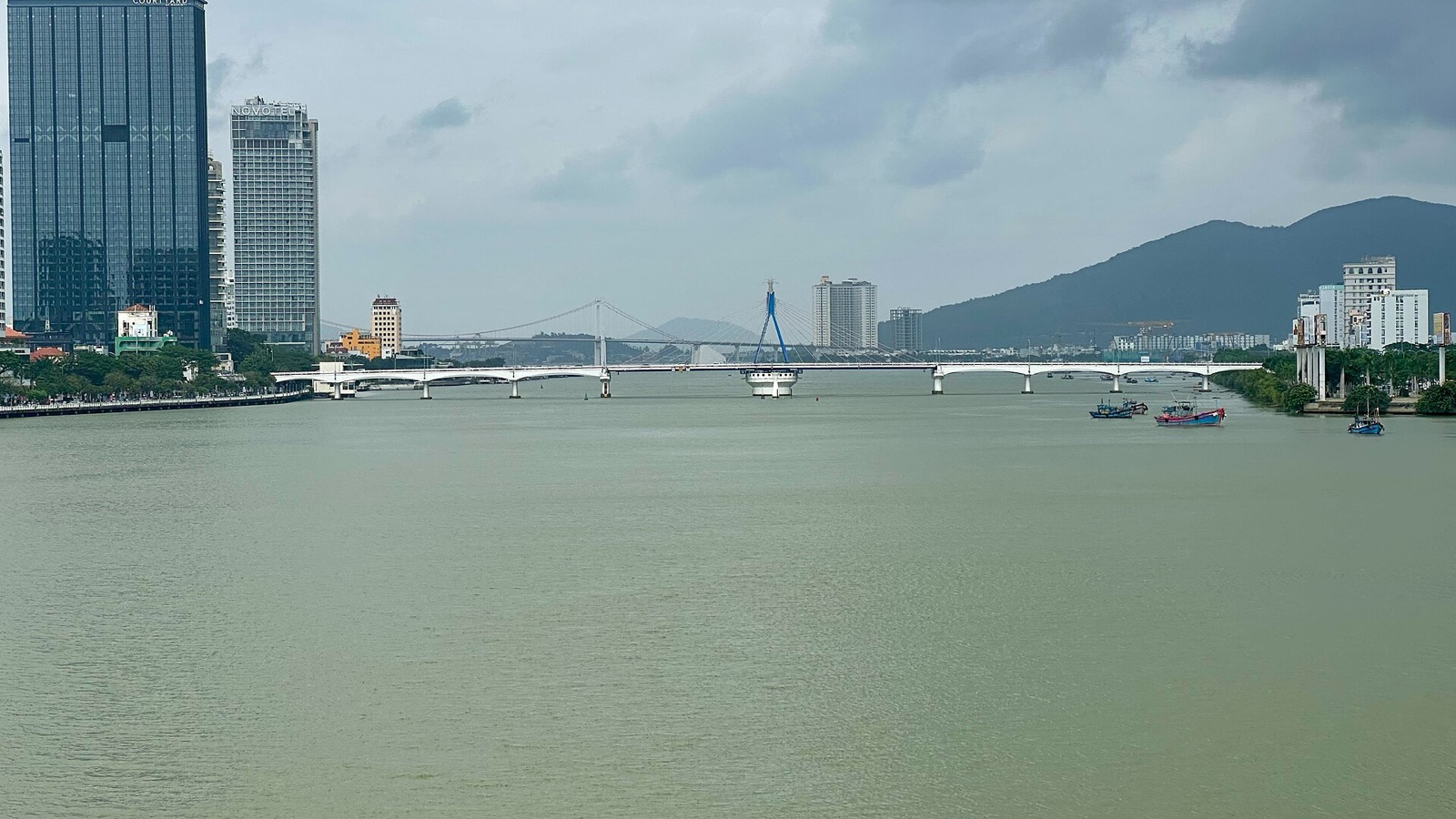
The Han forms where the Cẩm Lệ and Đò Toản rivers meet, at the meeting point of the Hòa Xuân, Ngũ Hành Sơn and Hòa Cường wards, and flows north for about 9.8 kilometers to Da Nang Bay, according to Wikipedia. It's wide for its length, averaging 900 to 1,200 meters across and 4 to 5 meters deep. Six bridges cross it in the city: Tiên Sơn, Trần Thị Lý, Nguyễn Văn Trỗi, the Dragon Bridge, the Han River Bridge and Thuận Phước.
The bridge the city chipped in for
The turning point was the Han River Bridge, which opened on March 29, 2000. It's 487.7 meters long, with a 122.7-meter section that swings open on a circular turntable at its central pier, according to Wikipedia's entry on the bridge. It's described as the only swing bridge operating in Vietnam.
What makes it Da Nang's bridge is how it was paid for. It was financed in part by Vietnamese companies and donors from Da Nang. A plaque on the western ramp records more than 27.4 billion dong in donations. The bridge marked the beginning of economic development on both banks and appears in the city's logo.
Wikipedia describes the span swinging open late at night on weekends, but its entry was last revised in 2025, so check the current schedule locally before you wait up for it.
A bridge race
Once the east bank was connected, the bridges kept coming. The Thuận Phước suspension bridge, near the river mouth, opened on July 19, 2009. It's 1,850 meters long with a 405-meter main span, according to Wikipedia. Construction of the Dragon Bridge began the same day, and it opened in 2013 as the city's mascot. Read our history of the Dragon Bridge and its weekend fire show.
The bridges turned a river city into a two-bank city. The east bank now holds the beachfront hotel and apartment strip. Today, more bridge projects are in the works across the wider city, and not all of them are going smoothly. See our report on bridges built without approach roads.
The waterfront today
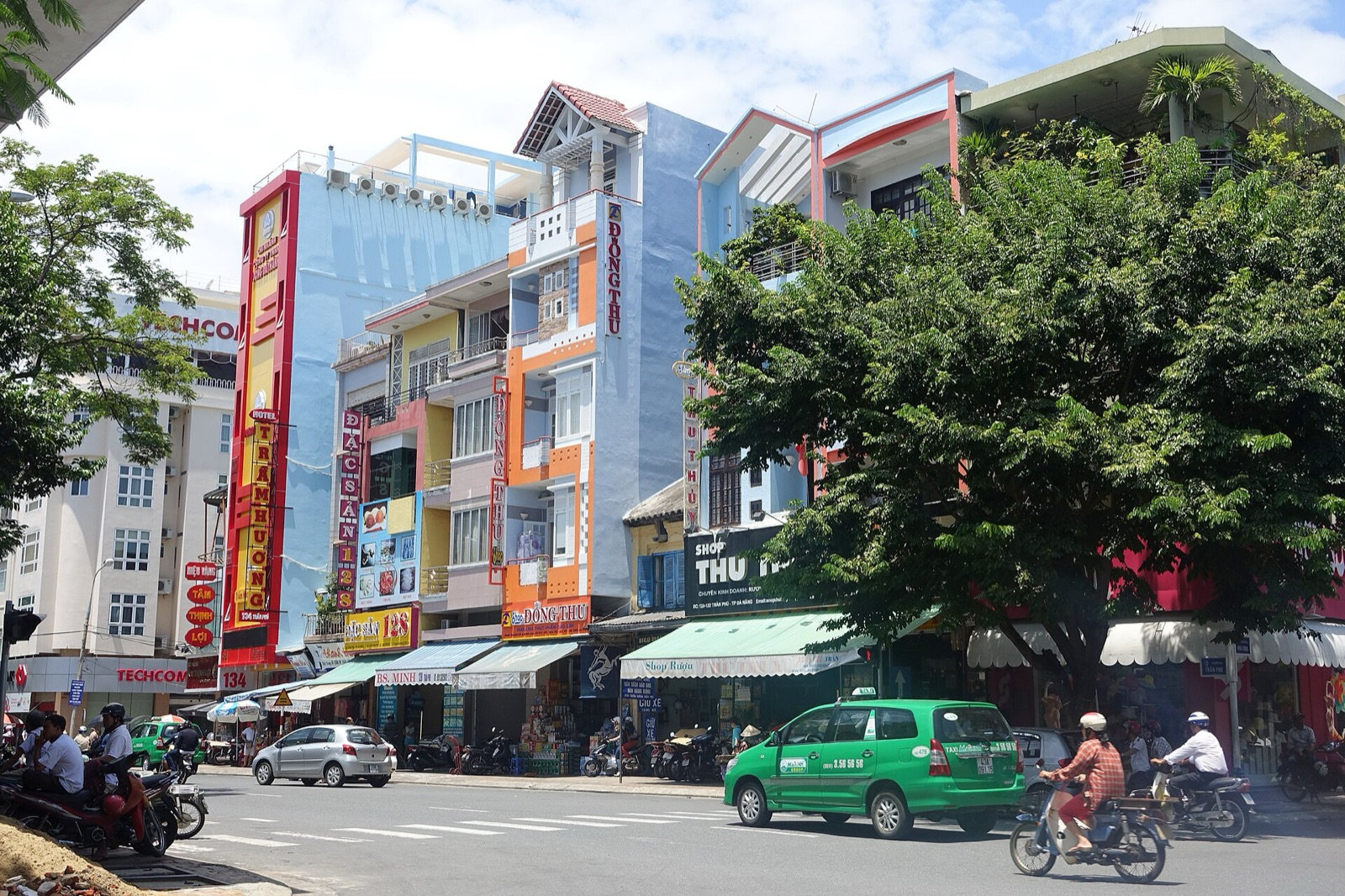
The west bank's riverside road, Bạch Đằng, is the city's front porch. Along or near it you'll find:
- Han Market, the city's best-known market, between the river and Trần Phú Street. See our markets guide.
- The Museum of Cham Sculpture, near the Dragon Bridge end. See our museum guide.
- The APEC sculpture park, west of the Dragon Bridge. See our parks guide.
The east bank has the night market. Son Tra Night Market, near the Dragon Bridge in An Hải ward, made news in July 2026 when social media posts accused vendors of overcharging. A preliminary inspection found no cases of vendors charging prices different from those listed, Tuoi Tre News reported, but the ward said the findings weren't enough to draw comprehensive conclusions about food safety.
The city wants more of this. It's betting on the riverbanks as the center of a night-time economy, and the river is the stage for the city's international fireworks festival.
How to use it
Walk the west bank in the early morning, before the heat. Cross the Han River Bridge on foot for the view. Come back after dark, when the bridges light up. And if you're here on a weekend night, stand near the Dragon's head at 9 p.m. Bring a raincoat. You'll see why.
Sources
- Hàn River (Vietnam)
- Han River Bridge
- Thuận Phước Bridge
- Da Nang dismisses overcharging claims at Son Tra night market after preliminary inspection
This story was compiled by the Da Nang Voice news desk from the published sources listed above. Facts, figures and quotes are attributed to those sources; Da Nang Voice did not conduct interviews for it unless the text says so. Corrections are dated and noted at the top of the story. Read our corrections policy. Spotted an error? Tell us.